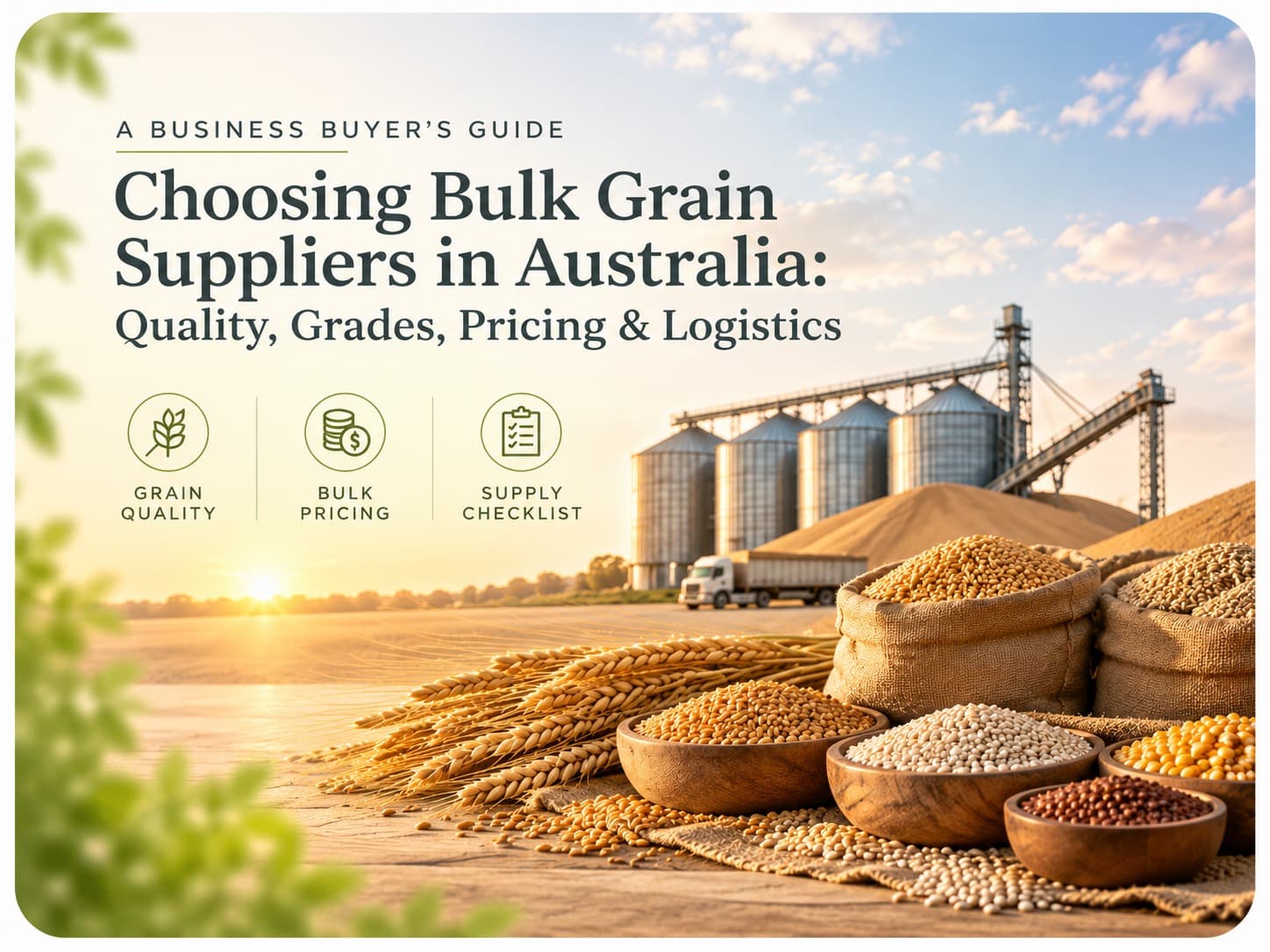
How to Choose Bulk Grain Suppliers in Australia: A Checklist for Businesses
Choosing the right bulk grain suppliers is important for Australian businesses that depend on a consistent supply of quality grains. Whether you operate a food manufacturing company, wholesale distribution business, grain processing facility or agricultural trading business, the right supplier can help you manage costs, maintain product quality, and avoid supply disruptions. However, comparing suppliers involves more than price. Grain quality, grades, order quantities, packaging, storage conditions and transportation arrangements all influence the value of a bulk purchase. This guide explains what businesses should check before selecting a bulk grain supplier in Australia.
"The right grain supplier is not just a vendor — they are a foundation of your supply chain."
1. Identify Your Grain Requirements
Start by defining the type and quantity of grain your business needs. Different industries have different requirements, and choosing the wrong variety or specification can affect production and product quality.
Common grains include wheat, rice, maize, barley, millet, sorghum and oats. Businesses sourcing Indian grains in Australia may also require varieties such as bajra, jowar and other speciality grains.
Before contacting suppliers, establish:
- The grain variety and intended use.
- Required quantity per order and expected monthly demand.
- Preferred grain origin, if applicable.
- Quality specifications and acceptable moisture levels.
- Required delivery location and schedule.
Clear requirements make it easier to compare quotations and determine whether a supplier can consistently meet your needs.
2. Check Grain Quality and Grades
Grain quality directly affects storage, processing and the final product. A competitive price is not useful if the grain fails to meet your business requirements. Ask potential suppliers for product specifications, available quality reports and representative samples where appropriate. Important quality factors include moisture content, grain size, cleanliness, foreign material, damaged grains and consistency between batches. Depending on the grain and its intended use, you may also need information about protein content, milling characteristics or other technical specifications. Australian grain standards and commercial specifications can vary by commodity and application. Confirm the relevant requirements before placing a large order.
3. Compare Bulk Grain Prices and Order Quantities
Price is an important consideration when purchasing grains in bulk, but the lowest quoted rate does not always represent the lowest overall cost. Bulk grain pricing can vary according to grain variety, quality grade, origin, order volume, seasonal availability, market conditions and delivery location. When comparing quotations, check whether the price includes packaging, loading, transportation, insurance and any applicable taxes or other charges. Also confirm the supplier's minimum order quantity. Some suppliers may be suitable for large commercial consignments but less practical for businesses requiring smaller, more frequent deliveries. Request written quotations using the same product specifications, quantities and delivery terms. This makes comparisons more meaningful.
4. Evaluate Packaging and Storage Facilities
Proper packaging and storage help protect grain quality during handling and transportation. Depending on the product and order size, grains may be supplied in bulk loads, bulk bags or smaller commercial sacks. Choose a packaging format that suits your receiving facilities, handling equipment and storage capacity. Before finalising a supplier, ask how the grain is stored and protected against moisture, pests, contamination and physical damage. Confirm that packaging is suitable for the product and transport method. If your business imports grains into Australia, also check applicable biosecurity conditions. Certain plant products and packaging materials may be subject to inspection, treatment or additional requirements.
5. Review Logistics and Delivery Capabilities
A reliable supply arrangement depends on more than product availability. Delayed deliveries can disrupt production, warehouse planning and customer commitments. Check whether the supplier can deliver to your required Australian location and handle your expected order volume. Discuss lead times, dispatch schedules, transport arrangements and procedures for managing delays. For imported grains, clarify who is responsible for freight coordination, customs documentation, import requirements and delivery after clearance. Businesses sourcing Indian grains in Australia should confirm product availability, country of origin, shipment timelines and applicable import conditions before committing to an order.
6. Verify Supplier Reliability and Documentation
Before placing a substantial order, review the supplier's business credentials, trading history, references and ability to fulfil repeat orders. Ask for clear product descriptions, invoices, packing details and relevant quality or origin documentation. Additional certificates may be required depending on the grain, its origin and its intended use. Agree on payment terms, delivery responsibilities, quality acceptance criteria and the process for handling damaged goods or discrepancies. A written agreement can help both parties understand their responsibilities and reduce avoidable disputes.
Bulk Grain Supplier Checklist
Use this checklist before choosing a supplier:
- Confirm grain variety and intended use.
- Verify quality specifications and grain grades.
- Compare total delivered costs, not just product prices.
- Check minimum order quantities and supply capacity.
- Review packaging and storage conditions.
- Confirm delivery schedules and transport arrangements.
- Verify relevant import, biosecurity and product documentation.
- Agree on payment terms and quality-related procedures.
Frequently Asked Questions
Contact Dakshin Global to discuss your grain sourcing and international trade requirements.
Contact UsAbout the Author
Dakshin Global Team
The Dakshin Global team specialises in import & export, logistics, and customs solutions. We share insights to help businesses navigate the global trade landscape with confidence.
Recent Posts
October 30, 2026
Indian Flour Mill Machine Buying Checklist for Austr…
October 30, 2026
Best Indian Flour Mill for Home Use in Australia: Wh…
October 30, 2026
Air Freight from India to Australia: Cost, Transit T…
September 01, 2026
7 Indian Grains You Can Add to Your Everyday Diet